> For the complete documentation index, see [llms.txt](https://docs.digibee.com/documentation/llms.txt). Markdown versions of documentation pages are available by appending `.md` to page URLs; this page is available as [Markdown](https://docs.digibee.com/documentation/troubleshooting/integration-issues/dgb-truncated.md).
# How to handle @@DGB\_TRUNCATED@@
Understand the use of the @@DGB\_TRUNCATED@@ placeholder to optimize memory and handle large volume JSON responses.
In the Digibee Integration Platform, you may encounter the term `@@DGB_TRUNCATED@@` when working with connectors that return long JSON responses. This placeholder is a mechanism designed to optimize memory usage by truncating the response and is used when a JSON response exceeds a certain length.
While it may seem like an obstacle at first, understanding its purpose and how to use it can streamline your workflow and ensure accurate data processing.
## What is @@DGB\_TRUNCATED@@?
The term `@@DGB_TRUNCATED@@` is used by Digibee to indicate that the payload recorded in the log messages has been truncated. This happens when the payload is larger than 320kb. In these cases, the pipeline is executed normally, but the payload is logged in truncated form.
## Why does @@DGB\_TRUNCATED@@ occur?
The main reason for using `@@DGB_TRUNCATED@@` is to save memory. By truncating long JSON responses, the Digibee Integration Platform can efficiently manage memory usage, especially in scenarios where large payloads are processed.
## How to handle @@DGB\_TRUNCATED@@?
If you find `@@DGB_TRUNCATED@@` in your workflow logs or outputs, it’s important to understand that this is not the original JSON response. To view the full JSON data, you have two alternatives:
* Manually convert it by removing the `@@DGB_TRUNCATED@@` placeholder and any extra characters introduced during truncation. In particular, make sure that you convert single quotation marks (`'`) to double quotation marks (`"`).
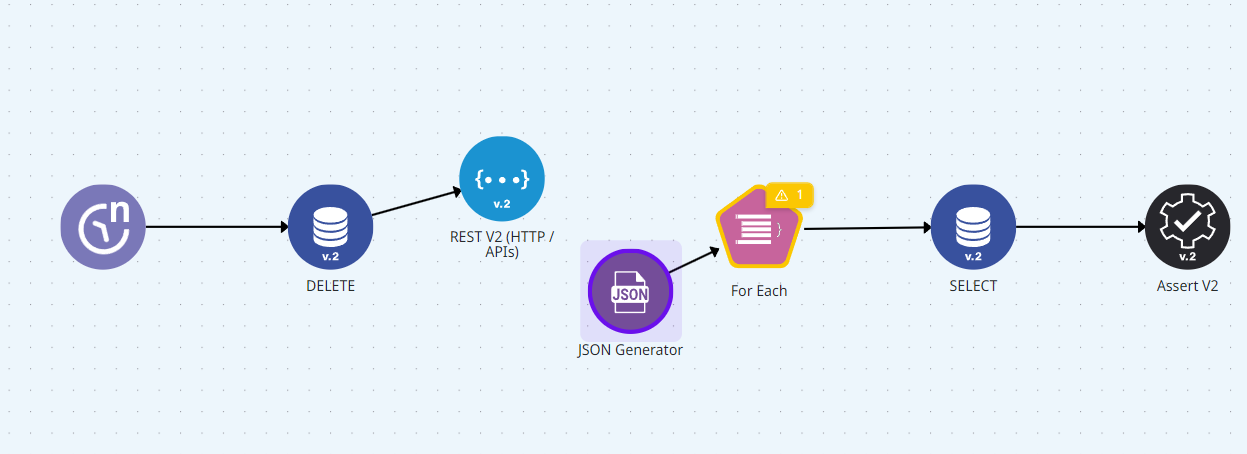
* If you are working with the [Execution panel](/documentation/development-cycle/build-overview/canvas/execution-panel.md), you can place the connector that returns the truncated JSON at the end of your workflow. This way, the Digibee Integration Platform recognizes that you need the full JSON response and sends it correctly without truncation.
---
# Agent Instructions
This documentation is published with GitBook. GitBook is the documentation platform designed so that both humans and AI agents can read, navigate, and reason over technical content effectively. Learn more at gitbook.com.
## Querying This Documentation
If you need additional information that is not directly available in this page, you can query the documentation by asking a question.
Perform an HTTP GET request on the following URL with the `ask` and `goal` query parameters:
```
GET https://docs.digibee.com/documentation/troubleshooting/integration-issues/dgb-truncated.md?ask=&goal=
```
`ask` is the immediate question: it should be specific, self-contained, and written in natural language.
`goal` is what the user is ultimately trying to achieve, the reason they need the answer. Sharing it helps GitBook give you a better, more relevant answer. A goal is most helpful when it describes the outcome the user wants rather than restating the question. For example, with `ask=how do I create an API token`, a goal like `automate deployments from our CI pipeline` lets GitBook tailor the answer to that use case.
The response will contain a direct answer to the question and relevant excerpts and sources from the documentation.
Use this mechanism when the answer is not explicitly present in the current page, you need clarification or additional context, or you want to retrieve related documentation sections.